Last week, I saw a performance of Bye Bye Birdie at the La Habra Depot Theatre in Orange County. My teenage daughter is a big musical theater fan but had never seen the show. She knew the title from pop culture references, though. Thank you, The Summer I Turned Pretty.
The production was a sweet surprise. The cast was well chosen, enthusiastic, and vocally strong. The staging and choreography even made clever use of the tiny theater’s small space.
I’ve never shown my daughter the 1963 film of Bye Bye Birdie. Yes, it has fans, but I dislike it thanks to strange casting choices. For starters, it’s upsetting that Janet Leigh plays Rose when the role was written as/played by a Latina (Chita Rivera) in the original Broadway cast. Plus, Leigh makes a bland Rose. Meanwhile, Ann-Margret feels miscast as Kim MacAfee, an ordinary teenage girl from Sweet Apple, Ohio. Ann-Margret, who dominates all her scenes, is anything but ordinary. Her Kim seems less girl next door and more like a future Hollywood star. The film also inserts a stupid subplot involving a scientific experiment and a Russian ballet troupe.
Fun fact: My parents saw Bye Bye Birdie at the Hollywood Pantages Theatre on their first date back when it was a movie venue. They hated the movie and would groan any time the musical came up in conversation, which was not uncommon in a family with three musical theater lovers.
Fortunately, casting wasn’t an issue with the La Habra production. Standouts included Matthew Rodriguez Kleeburg as Albert, Reece Chavez as Kim MacAfee, and Justin T. Bowler, whose eternally exasperated Mr. MacAfee earned the evening’s biggest laughs
However, a huge omission from the show disappointed me.
Rose Alvarez’s Act II number, “Spanish Rose,” was cut from this production.
I’m unsure if the omission was a directorial decision or a licensing issue. But since the song still appears in the licensed score, it seems likely it was an artistic choice.
If so, it was the wrong one.
Throughout Bye Bye Birdie, Rose is repeatedly subjected to racist remarks from Albert’s mother, Mae, who reduces her to crude stereotypes based on her heritage. This production softened many of those moments, turning Mae into more of an overbearing, “cute” mother than an outright bigot. Without that prejudice, the conflict between Rose and Mae loses almost all its bite.
More importantly, removing “Spanish Rose” strips Rose of her major defining moment.
By the second act, Rose has reached her breaking point. Fed up with Albert’s inability to stand up to his mother, she responds with a sarcastic song that exaggerates every ridiculous stereotype Mae has thrown at her over the years.
I’ll eat the tacos and the enchilada
I’ll drink tequila till I feel no pain
The joke isn’t on Rose.
It’s on Mae.
Composer Charles Strouse and lyricist Lee Adams weren’t reinforcing stereotypes, they were satirizing them. Rose sarcastically embraces every ignorant assumption made about her, exposing the absurdity of those prejudices. The song isn’t racist; it’s anti-racist. It ridicules racists.
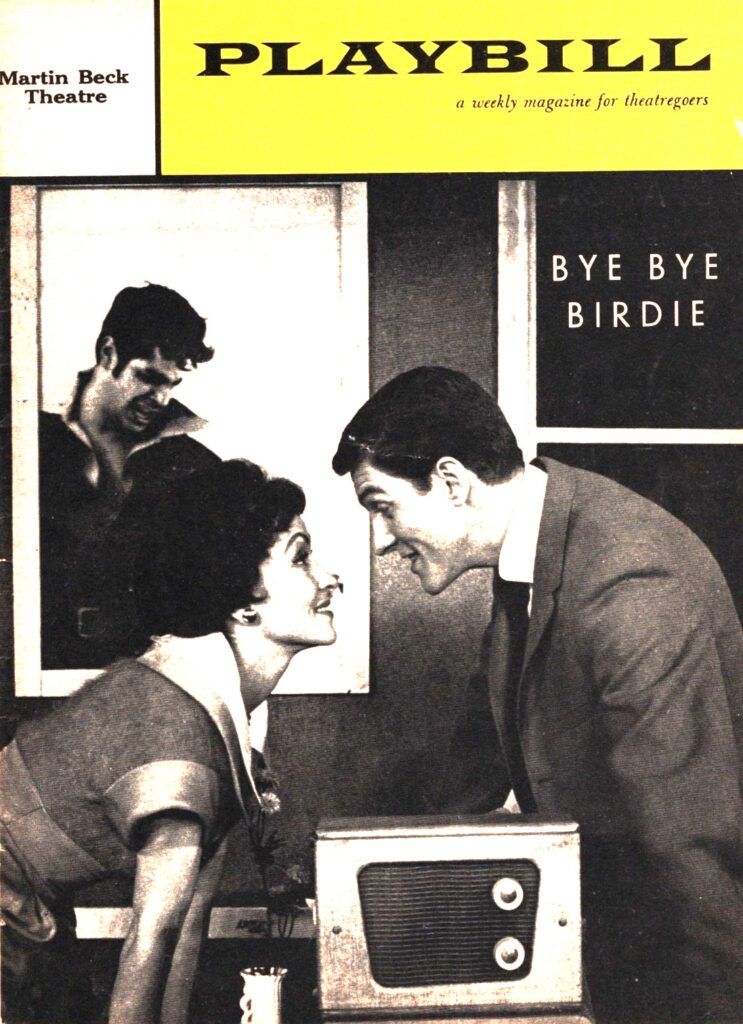
The original production understood that distinction. Chita Rivera transformed “Spanish Rose” into one of Broadway’s best 11-o’clock numbers, using humor, bravura, and dance to turn years of prejudice back on her tormentor in the show’s most satisfying moment.
Removing it weakens Rose’s arc. Instead of standing up for herself in a triumphant showstopper, she simply moves on. Plus, the audience loses the emotional payoff that the writers carefully orchestrated.
That’s unfortunate because this production’s Rose, Maddie Ellingson McMullin, seemed fully capable of crushing the song. She showed sharp comic timing and a strong stage presence in her other numbers, so it’s a shame she was denied the opportunity to shine in Rose’s best number.
I wish the powers that be had trusted both the material and the audience enough to let Rose enjoy her moment.
Sometimes the best way to expose prejudice isn’t to erase it from a story, it’s to let he story ridicule it.
Leave a Reply