• Have you ever witnessed a performance so honest, so exposed, it left you speechless?

    I have.

    December 23, 1990, the day Jacques Williams died.

    Let me back up.

    In the final days of the 1990s, I bought my sister Phantom of the Operatickets as an early Christmas present. The blockbuster musical was in the middle of its wildly successful Los Angeles run at the Ahmanson Theatre.
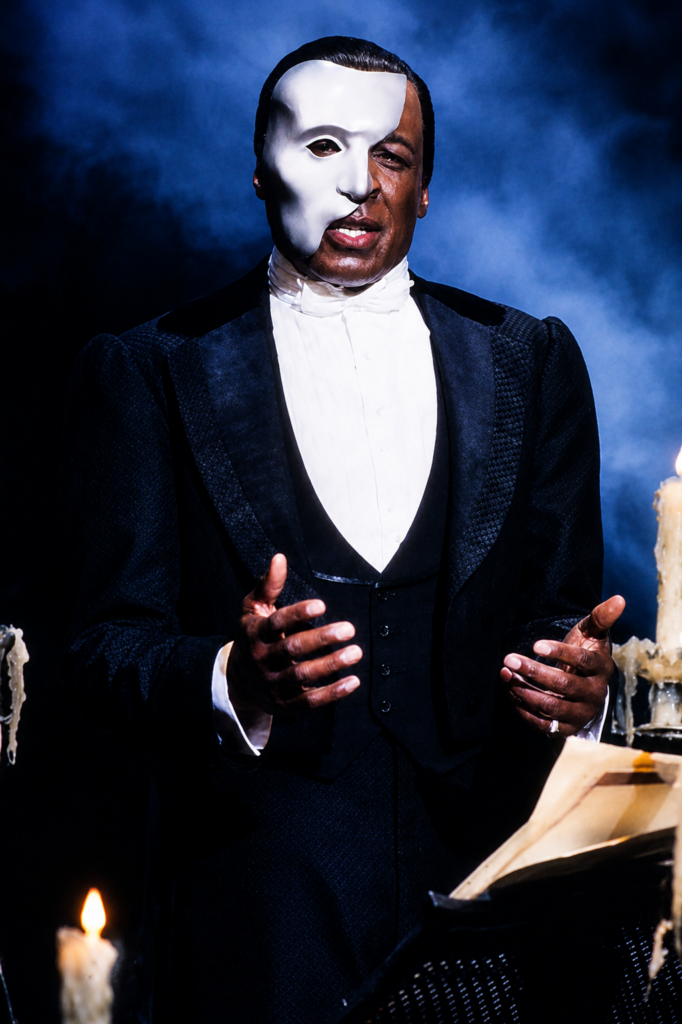
    Robert Guillaume Dons the Phantom Mask

    The production had opened with Tony Award winner Michael Crawford as the Phantom. When Crawford departed, Robert Guillaume, best known as the cynical butler-turned-politician Benson, was cast as the tortured genius beneath the mask.

    Most people didn’t know Guillaume could sing.

    Theater fans knew better.

    Before becoming a TV star, Guillaume built an impressive stage résumé. He appeared on Broadway in PurlieFinian’s Rainbow, and starred as Nathan Detroit in the all-Black revival of Guys and Dolls.

    He received glowing reviews for his Phantom. I’d seen him early in the run and felt his rich baritone and commanding stage presence fit the role perfectly.

    On December 23, my sister and I arrived at the Music Center surrounded by Christmas decorations and holiday crowds. Across the plaza, families dressed in their holiday best headed to The Nutcracker.

    However, we had a date with the Phantom.

    When Guillaume took the stage in act one of Andrew Lloyd Webber’s musical, the audience showered him with thunderous applause. His voice sounded glorious in his early scenes, but as the matinee unfolded, his performance transcended into something astounding.

    By the time he sang “The Music of the Night,” Guillaume’s performance had acquired an extraordinary intensity. Every lyric seemed profoundly personal. Every note felt painfully alive. 

    By the end of Act One, Guillaume brought a chilling desperation to the “All I Ask of You” Reprise, capturing the Phantom’s anger and growing despair as he unraveled before our eyes.

    At intermission, my sister and I agreed that we were witnessing an extraordinary performance.It felt like we were watching a Hall of Fame pitcher throw a perfect game… one we would discuss for years to come. 

    In the show’s final moments, as the Phantom realizes Christine will never love him, Guillaume seemed to strip away every layer separating actor from character. His anguish was raw… gut-wrenching. As he sobbed with heartbreak, the audience cried with him.

    When the curtain fell, I wiped away tears… certain it was the greatest performance I’d ever seen in a musical.

    A week later, I learned the significance of that day.

    Guillaume was carrying an unimaginable burden during that matinee. Earlier that day, his son, Jacques Williams, had died from complications related to AIDS.

    He could have canceled his performance. No one would have judged him for it.

    Instead, the actor found refuge in the stage. He buried his grief in the soul of a broken artist tormented by the harsh realities of life.

    Suddenly, everything about that special performance made sense.

    The grief. The desperation. The vulnerability. None of it had been manufactured. For three hours, Robert Guillaume poured the worst day of his life into one of theater’s most demanding roles.

    He let us witness his broken heart.

    Actors spend their careers trying to create moments that feel real.

    That night, Robert Guillaume wasn’t pretending.

    He wasn’t acting.

    He was grieving.

    And he shared his unbearable pain with over 2,000 theatergoers.

    More than three decades have passed since that day. I’ve seen hundreds of performances since then. I’ve witnessed breathtaking voices, dazzling choreography, and unforgettable star turns.

    But I’ve never again seen an actor reveal so much of himself to an audience.

    That’s why I still remember the date.

    December 23, 1990.

    I thought I was watching an actor give the performance of a lifetime.

    A week later, I realized I had watched a father survive the worst day of his life.
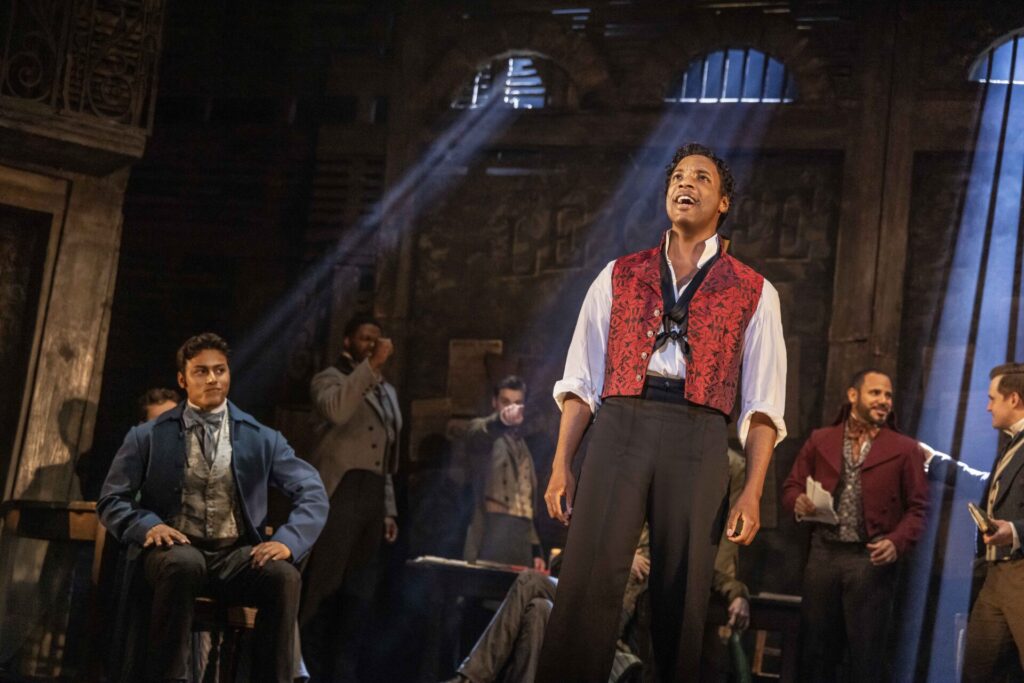
  • The national tour of Les Misérables closes today. It will have its final performance tonight in Boston. By the time the curtain falls, the production will have played 1,417 performances in 98 cities.

    I saw this tour twice at the Hollywood Pantages Theatre in Los Angeles, in 2023 and 2025, and loved it both times.

    Nick Cartell, who played Jean Valjean more than 1,800 times, was the heart of this tour. I’ve heard many Valjeans sing “Bring Him Home” over the years, but his rendition was breathtaking.

    Christian Mark Gibbs was another standout. He’s a commanding presence with a gorgeous voice that filled the theater. While wtching him, I thought, I’m seeing a future Broadway star. I felt the same way when I saw Sutton Foster play Eponine in 2000. I felt it again watching Gibbs in 2025. His rich, golden voice that could inspire composers to write roles for him. For the record, he now plays the role in the new arena tour.

    Christian Mark Gibbs as Enjolras (Photo by Matthew Murphy)

    Christine Heesun Hwang was another powerhouse performer as the heartbreaking Eponine when I saw the production in 2023.

    Wanna see something fun? Watch Nick Cartell’s quick change at the top of the show as he transforms from Prisoner 24601 into Monsieur Madeleine in a flash.

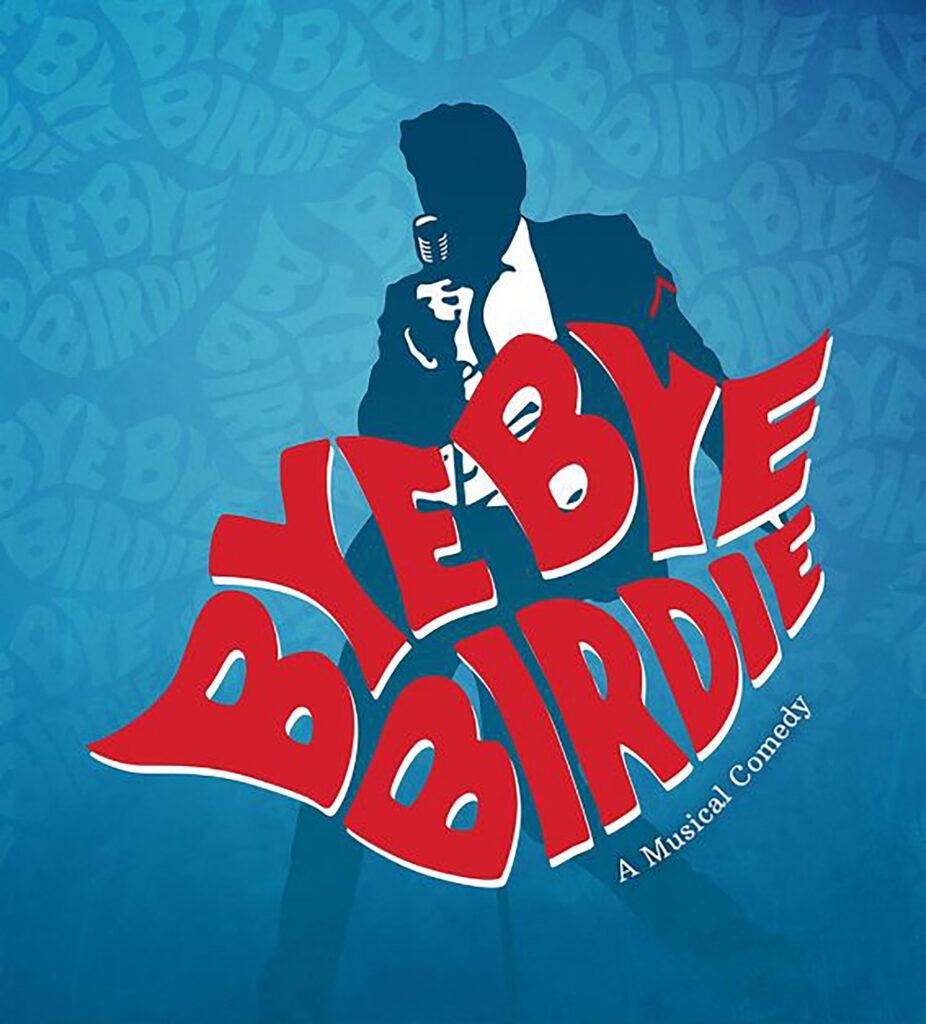
  • Last week, I saw a performance of Bye Bye Birdie at the La Habra Depot Theatre in Orange County. My teenage daughter is a big musical theater fan but had never seen the show. She knew the title from pop culture references, though. Thank you, The Summer I Turned Pretty.

    The production was a sweet surprise. The cast was well chosen, enthusiastic, and vocally strong. The staging and choreography even made clever use of the tiny theater’s small space.

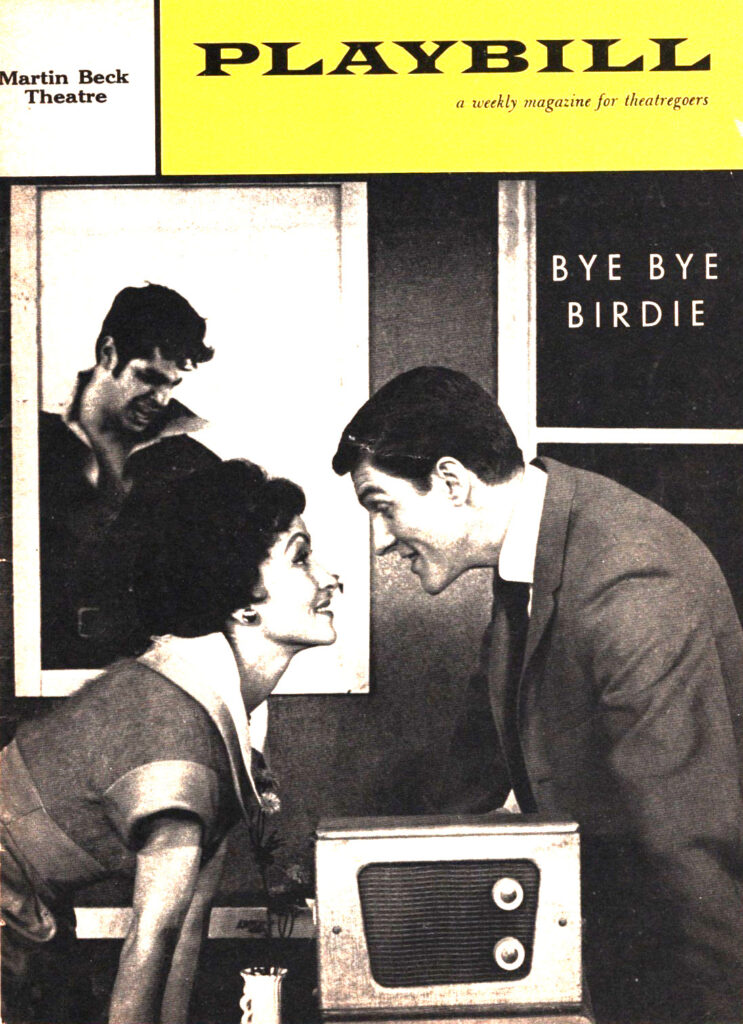
    I’ve never shown my daughter the 1963 film of Bye Bye Birdie. Yes, it has fans, but I dislike it thanks to strange casting choices. For starters, it’s upsetting that Janet Leigh plays Rose when the role was written as/played by a Latina (Chita Rivera) in the original Broadway cast. Plus, Leigh makes a bland Rose. Meanwhile, Ann-Margret feels miscast as Kim MacAfee, an ordinary teenage girl from Sweet Apple, Ohio. Ann-Margret, who dominates all her scenes, is anything but ordinary. Her Kim seems less girl next door and more like a future Hollywood star. The film also inserts a stupid subplot involving a scientific experiment and a Russian ballet troupe.

    Fun fact: My parents saw Bye Bye Birdie at the Hollywood Pantages Theatre on their first date back when it was a movie venue. They hated the movie and would groan any time the musical came up in conversation, which was not uncommon in a family with three musical theater lovers.

    Fortunately, casting wasn’t an issue with the La Habra production. Standouts included Matthew Rodriguez Kleeburg as Albert, Reece Chavez as Kim MacAfee, and Justin T. Bowler, whose eternally exasperated Mr. MacAfee earned the evening’s biggest laughs

    However, a huge omission from the show disappointed me.

    Rose Alvarez’s Act II number, “Spanish Rose,” was cut from this production.

    I’m unsure if the omission was a directorial decision or a licensing issue. But since the song still appears in the licensed score, it seems likely it was an artistic choice.

    If so, it was the wrong one.

    Throughout Bye Bye Birdie, Rose is repeatedly subjected to racist remarks from Albert’s mother, Mae, who reduces her to crude stereotypes based on her heritage. This production softened many of those moments, turning Mae into more of an overbearing, “cute” mother than an outright bigot. Without that prejudice, the conflict between Rose and Mae loses almost all its bite.

    More importantly, removing “Spanish Rose” strips Rose of her major defining moment.

    By the second act, Rose has reached her breaking point. Fed up with Albert’s inability to stand up to his mother, she responds with a sarcastic song that exaggerates every ridiculous stereotype Mae has thrown at her over the years.

    I’ll eat the tacos and the enchilada
    I’ll drink tequila till I feel no pain

    The joke isn’t on Rose.

    It’s on Mae.

    Composer Charles Strouse and lyricist Lee Adams weren’t reinforcing stereotypes, they were satirizing them. Rose sarcastically embraces every ignorant assumption made about her, exposing the absurdity of those prejudices. The song isn’t racist; it’s anti-racist. It ridicules racists.

    The original production understood that distinction. Chita Rivera transformed “Spanish Rose” into one of Broadway’s best 11-o’clock numbers, using humor, bravura, and dance to turn years of prejudice back on her tormentor in the show’s most satisfying moment.

    Removing it weakens Rose’s arc. Instead of standing up for herself in a triumphant showstopper, she simply moves on. Plus, the audience loses the emotional payoff that the writers carefully orchestrated.

    That’s unfortunate because this production’s Rose, Maddie Ellingson McMullin, seemed fully capable of crushing the song. She showed sharp comic timing and a strong stage presence in her other numbers, so it’s a shame she was denied the opportunity to shine in Rose’s best number.

    I wish the powers that be had trusted both the material and the audience enough to let Rose enjoy her moment.

    Sometimes the best way to expose prejudice isn’t to erase it from a story, it’s to let he story ridicule it.

  • I had a text waiting for me when I got out of the screening of Bill Condon’s big-screen adaptation of the Broadway musical, Kiss of the Spider Woman.

    Text: Can Diego Luna sing?

    My reply: It doesn’t matter. 🙁

    Warning: The Broadway musical Kiss of the Spider Woman is one of my favorite musicals of all time, so I’m quite protective it.

    I never expected the musical to receive a big-screen adaptation, though…especially after Rob Marshall borrowed much of its storytelling concept for his movie version of Chicago.

    Here are my scattered thoughts on the Kiss of the Spider Woman movie.

    Let’s get the unfortunate news out of the way first. They cut “The Day After That.”

    And most of the other prison songs.

    Unforgivable.

    It’s not a bad adaptation….parts of it are very good.

    It’s just a safe adaptation, and that part disappointed me.

    It’s like they didn’t trust audiences not to giggle when people broke out in song so they wimped out and limited the song and dance to Aurora’s movie within the movie.

    And like I said, that’s…safe.

    Disappointing.

    The only unintentional snickers this movie received was when Ben Affleck’s name flashed on screen as one of the movie’s producers. You know…because of the whole short marriage thing.

    With the exception of a beautiful, bilingual version of “Dear One,” all the prison songs are gone. Poof! Absent! No more!

    So….why bother making a musical at all?

    The non-musical story was already told in the 1985 film version starring William Hurt and Raul Julia.

    The original Broadway musical had a fantastic score. The prison songs and Aurora songs complemented each other beautifully for a perfect balance of reality and fantasy that made for a thrilling night at the theater.

    The three stars….

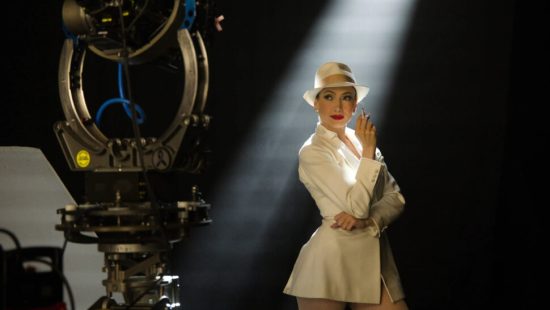
    Jennifer Lopez is a blonde for most of the movie. Superficial comment: my husband wasn’t a fan of the color on her. Anyway, Lopez is gorgeous and looks like a genuine movie star. She sings decently, acts well, and dances up a storm in the movie sequences. The theater burst into spontaneous applause after one particularly exhilarating dance sequence in “Where You Are.”

    Did I mention that the prison songs are gone?

    It was devastating to hear Valentin’s dialogue that led into “The Day After That” on stage only for…. the song to be cut in the movie.

    Me in the theater.

    Argh!!!!!!!!!!!!!!!

    The good news is that Diego Luna and newcomer Tonatiuh are excellent in their roles as Valentin and Molina, respectively. I expect the latter will have a nice film career after Spider Woman hits theaters, and Luna will continue to thrive in his career.

    In fact, the Valentin and Molina relationship is my favorite part of the movie. The transition of their relationship from strangers to cautious friends to lovers is believable and quite moving….giving the story its heart.

    But they cut the prison songs.

    Why, oh why?

    For years, I’ve been telling my young, musical-theater-loving-daughter that the Broadway production of Kiss of the Spider Woman was my favorite theatrical experience of my life.

    I couldn’t wait to share the musical with her.

    “You’ll love it,” I’ve told her over the years.

    “I can’t wait!” she always replies.

    So we have been waiting impatiently for a big revival to happen.

    But nothing.

    Then the movie was announced, and I was thrilled….cautiously….because musicals haven’t always jumped successfully to the big screen.

    But when I called my daughter after the screening let out, she asked me excitedly what I thought about the movie.

    I replied, “Parts of it were very good.”

    “Will I like it?” she asked.

    And my first thought was… I’ve raved about this show for years.I don’t want this movie to be her introduction to the musical…because it’s only half of the musical.

    “Let’s wait for a major stage revival.” I told her.

    Like I said, these were my scattered thoughts.

  • Did you know that Australian actress Toni Collette auditioned for the role of Roxie in the 2002 film adaptation of the Broadway musical Chicago? Here’s a clip of her singing “Roxie.”

  • Did you know that Australian mega talent Toni Collette auditioned for the role of Roxie in the 2002 film adaptation of the Broadway musical Chicago? Here’s a clip of her dancing to “Hot Honey Rag.”